
How Is Child Custody Decided in South Carolina?
August 25, 2026
How Do Personal Injury Settlements Work in South Carolina?
September 21, 2026Safer Crossings Are Coming to Highway 544: What South Carolina Drivers and Pedestrians Should Know
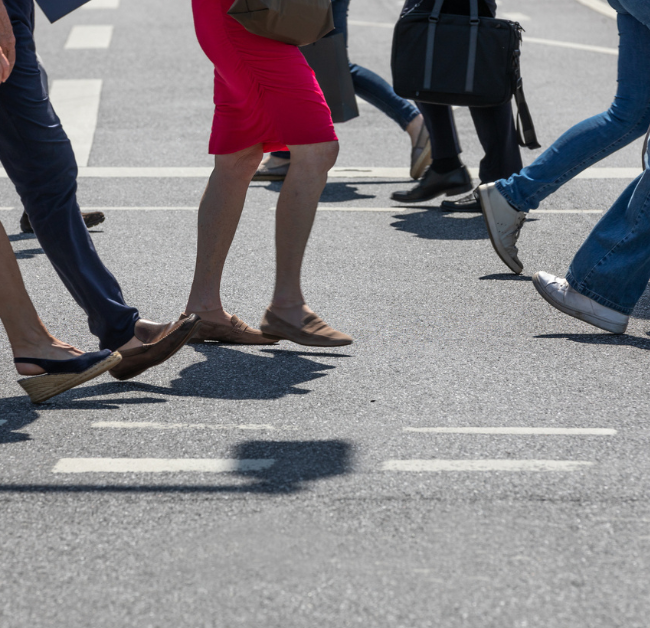
Highway 544 near Coastal Carolina University stays busy. Students walk to class. Employees head to work. Residents, visitors, and customers travel through the area every day. With so many cars and people sharing the same stretch of road, pedestrian safety matters.
MyHorryNews recently reported that changes are coming to Highway 544 near the university. On Sept. 14, the South Carolina Department of Transportation and Coastal Carolina University announced plans to lower the speed limit to 35 mph, add a pedestrian-activated HAWK signal, and improve pavement markings. Officials expect those changes to take place this year. CCU also reported continued progress toward a planned pedestrian bridge near Founders Drive.
Those improvements are good news for our community. But a safer road also depends on drivers and pedestrians knowing the rules and paying attention to one another.
What Is a HAWK Pedestrian Signal?
A HAWK signal helps pedestrians cross a busy road more safely. HAWK stands for High Intensity Activated Crosswalk. Unlike a regular traffic light that changes on a set cycle, a HAWK signal activates when a pedestrian asks to cross.
Drivers need to know what the different signal phases mean and follow them. They also need to slow down, watch closely, and give themselves enough time to react. The new signal, road markings, and lower speed limit should make the crossing easier to see. Still, no safety device can replace good judgment.
What Does South Carolina Law Say About Crosswalks?
South Carolina law gives both drivers and pedestrians responsibilities. When traffic signals are not in place or working, drivers generally must yield to a pedestrian who is in the proper part of a crosswalk. Drivers must slow down or stop when needed.
The law also says pedestrians cannot suddenly step off a curb or other safe place into the path of a vehicle that is too close to stop safely. Drivers also cannot pass another vehicle that has stopped at a crosswalk to let a pedestrian cross.
What if someone crosses outside a marked crosswalk? South Carolina law generally requires that pedestrian to yield to vehicles. When traffic signals control two nearby intersections, pedestrians must generally use the marked crosswalk between them.
That does not mean every accident has a simple answer. You cannot sum up South Carolina law by saying, “Pedestrians always have the right of way,” or, “If you were outside the crosswalk, you have no case.” The facts matter. Where was the pedestrian? What did the signal show? How fast was the driver going? Was it dark? Could the driver see the pedestrian? How much time did either person have to react? Those details can make a big difference.
Do Drivers Still Have a Duty to Avoid Pedestrians?
Yes. Drivers must still use reasonable care to avoid hitting a pedestrian. South Carolina law requires drivers to exercise due care to avoid a collision with a pedestrian. Drivers must also use extra care when they see a child or someone who is obviously confused, incapacitated, or intoxicated.
That means a driver cannot simply say, “The pedestrian should have yielded,” and assume that ends the issue. After a serious collision, an investigation could look at whether the driver was speeding, distracted, impaired, tired, following another vehicle too closely, or failing to watch the road.
Why Does the Lower Speed Limit on Highway 544 Matter?
A lower speed limit gives drivers more time to see a danger and react. Speed can also matter after a pedestrian accident. If a driver was speeding, that fact could become important evidence when determining whether the driver acted reasonably. But one speeding ticket does not automatically decide a personal injury case.
The opposite is also true. Driving under the posted speed limit does not always mean someone drove safely. Heavy traffic, rain, darkness, or a large number of pedestrians could require a driver to slow down even more. The law looks at the whole situation, not just the number on the speed limit sign.
What Happens If Both the Driver and Pedestrian Share Fault?
South Carolina uses comparative negligence rules. In simple terms, an injured pedestrian does not automatically lose the right to seek compensation just because someone claims the pedestrian also contributed to the crash. The amount of fault assigned to each person can affect whether the injured person can recover damages and how much they could recover.
South Carolina changed some of its rules for allocating fault among multiple responsible parties for claims that arise on or after Jan. 1, 2026. That makes it even more important to look at the facts and current law in each case.
No responsible lawyer can look at one photograph, one police report, or one detail about a crosswalk and know exactly who was legally at fault. You have to look at the evidence as a whole.
Could Someone Other Than the Driver Be Responsible?
Sometimes more than one person or company could play a role in a collision. Depending on the facts, an investigation could look at the driver, the vehicle owner, an employer whose worker was driving on the job, a contractor, a property owner, or another party. That does not mean each of those parties is automatically responsible. It simply means a complete investigation sometimes needs to look beyond the person behind the wheel.
Government-related claims also have different rules. Claims involving a government entity can fall under the South Carolina Tort Claims Act. Those cases can involve different deadlines, procedures, defenses, and limits on recovery. The Act generally provides a two-year period for bringing an action, with a possible three-year period when someone first files a qualifying verified claim. It also includes a one-year period for receiving that type of verified claim. Exceptions and other rules can change the answer. If a government agency could be involved, do not rely on a general deadline. Talk with an attorney promptly about the specific facts.
What Evidence Matters After a Pedestrian Accident?
Evidence can disappear faster than most people realize. Video can get recorded over. Road conditions can change. Vehicles get repaired. Witnesses forget details.
Depending on the accident, important evidence could include:
- Business, campus, traffic, or home security video
- Vehicle event data and electronic records
- Cellphone records or other evidence of distraction
- Witness names and statements
- Photos of the scene, lighting, and road markings
- Vehicle damage and debris
- Medical records
- Police reports
- Accident reconstruction when needed
South Carolina generally gives someone three years to bring many personal injury and wrongful death claims. However, some cases have shorter deadlines or special rules. The filing deadline is important, but it is not the only reason to act quickly. Evidence can disappear long before the legal deadline arrives.
Safer Highway 544 Crossings Start With All of Us
The planned Highway 544 improvements are a positive step for Coastal Carolina University and the surrounding community. But paint, signals, bridges, and speed limits can only do so much. Drivers need to slow down and watch for people crossing. Pedestrians need to use designated crossings and follow signals. Everyone needs to put distractions away and pay attention.
At Winslow Law, we would much rather talk about preventing a pedestrian accident than helping a family after one happens. Learn how the new HAWK signal works, expect more pedestrians near campus, and give the people around you enough time and space to get home safely.
If you or a family member has suffered a serious injury in a pedestrian collision and you have questions about South Carolina law, contact Winslow Law to discuss the specific circumstances.
Prior results do not guarantee a similar outcome. This article provides general educational information and does not create an attorney-client relationship.
Winslow Law—Committed counselors for our clients and community.
FAQs
1. Do South Carolina Drivers Always Have to Stop for Pedestrians?
No. It depends on where the pedestrian is crossing, what the traffic signal shows, and what is happening around them. Drivers must yield when the law requires it, but they also have a general duty to use reasonable care and try to avoid hitting a pedestrian.
2. Can a Pedestrian Have a Claim if They Were Outside a Crosswalk?
Possibly. Crossing outside a marked crosswalk can affect who had the right of way and how fault is divided. However, drivers still have a duty to watch for pedestrians and use reasonable care. The full facts of the accident matter.
3. Does Speeding Automatically Make a Driver Responsible for a Pedestrian Accident?
No. Speeding can be important evidence, but it does not automatically decide who is legally responsible. The court can also look at visibility, traffic, road conditions, the pedestrian’s actions, and whether the driver had enough time to react.
4. What Happens if the Driver and Pedestrian Were Both at Fault?
South Carolina uses comparative negligence rules. That means fault can be divided between the people involved. A pedestrian who shares some responsibility for the accident could still have a claim, but their percentage of fault can affect whether they recover compensation and how much they could receive.
5. How Long Do I Have to File a Pedestrian Injury Claim in South Carolina?
Many South Carolina personal injury claims have a three-year deadline, but some cases have shorter deadlines or special rules. Claims involving a government agency can be especially different. It is important to speak with an attorney as soon as possible because evidence can disappear long before a filing deadline arrives.
Sources
1. MyHorryNews, “Speed limit reduction, crosswalk coming to Highway 544 near Coastal Carolina University.”
2. Coastal Carolina University, “SCDOT, Coastal Carolina University announce upcoming safety improvements along SC-544,” September 14, 2026.
3. South Carolina Code §§ 56-5-3130 and 56-5-3150, pedestrian crosswalk and crossing rules.
4. South Carolina Code § 56-5-3230, drivers’ duty to exercise due care.
5. South Carolina Code § 15-38-15, allocation and apportionment of fault.
6. South Carolina Tort Claims Act, including §§ 15-78-80, 15-78-100 and 15-78-110.
7. South Carolina Code §§ 15-3-530 and 15-3-535, general limitation periods.